
MATERIALISING NOSTALGIA
Crafting Metal Wearables from Recycled Materials
by Firstname Lastname
Final Designed Collection: Materialising Nostalgia
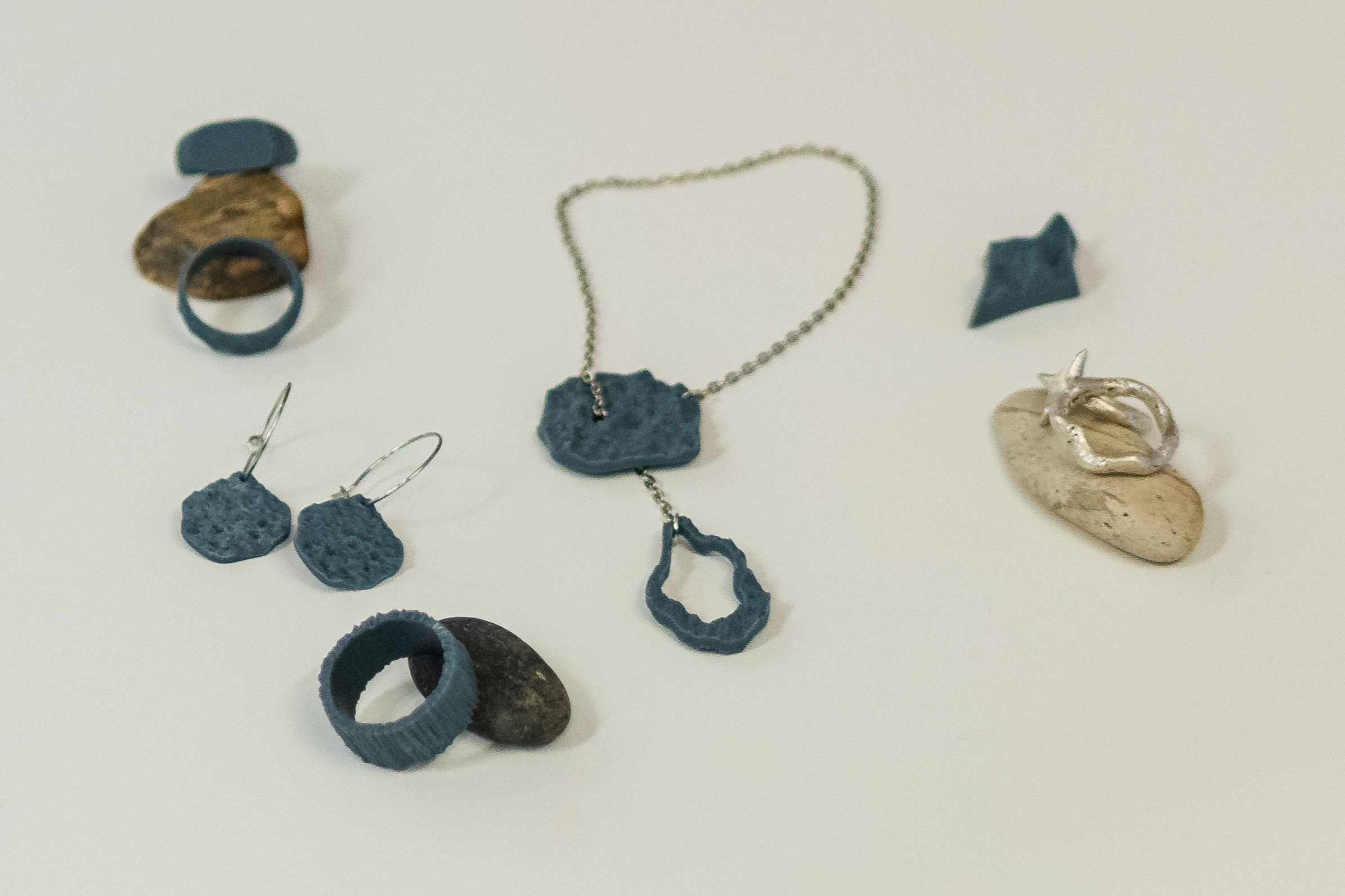
3D printed and sand-casted trial iterations
Abstract
Materialising Nostalgia explores the potential of recycled metal wearables in the luxury market, focusing on how design can reshape consumer behaviour and address resource overconsumption. It argues that luxury has shifted from craftsmanship and exclusivity to brand recognition and status, offering an opportunity to redefine it through sustainability, emotional durability, and authentic craftsmanship.
The research facilitates the amalgamation of traditional jewellery-making techniques with contemporary tools and ideas, reflecting a balance between heritage and innovation. The concept of “materialised nostalgia” is achieved through sound visualisation, leveraging sensory triggers such as texture and form to evoke specific memories, creating jewellery pieces that are both sustainable and deeply meaningful to consumers.
The final designed collection bridges the gap between luxury and sustainability, offering a model for how industries can integrate traditional craft values with contemporary ethical considerations. By addressing both consumer expectations and pressing environmental issues, it provides a pathway for creating products that resonate emotionally while contributing to a more sustainable and circular economy.
“The concept of “materialised nostalgia” is achieved through sound visualisation, leveraging sensory triggers such as texture and form to evoke specific memories, creating jewellery pieces that are both sustainable and deeply meaningful to consumers.”
Closeup of sound-distorted ring
Design Intent
This project is materialised as a designed jewellery collection, made to provide a methodology of emotionally durable sustainable design. By focusing on jewellery, an object historically tied to emotional and cultural significance, this study created a means to incorporate environmentalism with an instance of luxury that is both exclusive and meaningful.
The integration of recycled materials aims to challenge the prevailing narrative of luxury as inherently wasteful or resource-intensive, offering an alternative vision that is both aspirational and socially responsible. Furthermore, by examining the role of nostalgia and sensory experiences in emotional attachment to luxury products, this research contributes to the understanding of how intangible elements such as memory and emotion can play a pivotal role in consumer decision-making.
By identifying key drivers of emotional connection and exploring innovative approaches to materiality, this study provides valuable insights for product designers, marketers, and sustainability advocates seeking to reconcile the enduring appeal of luxury with the imperatives of ethical production. Ultimately, the research aims to demonstrate that luxury and sustainability are not mutually exclusive but can, in fact, enhance each other when approached thoughtfully and creatively.
“Ultimately, the research aims to demonstrate that luxury and sustainability are not mutually exclusive but can, in fact, enhance each other when approached thoughtfully and creatively.”
Closeup of sound-distorted earrings
Closeup of sound-distorted slip-chain necklace
A sustainable moss packaging solution
Bio
As a graduate product design student, Ruby’s university education led her to develop a passion for sustainability, and the urge to understand the drivers behind human consumption; our excessive longing for more. Her time studying at the University of Technology Sydney gifted her with a broad knowledge of a variety of design practices, many of which she demonstrates within her honours project, Materialising Nostalgia. Her interest in sustainable design was sparked at a young age, growing up in a rural community exposing her to the beauty behind self-sufficient and anti-consumerist lifestyles. Moving to Sydney for her bachelor's only cemented her ambition to integrate more ethical means of consumption into the everyday lives of consumers, which is something she has expressed throughout the duration of her degree. Ultimately, she hopes her work, starting with this dissertation, will actively contribute to more responsible and impactful design practices in the consumer goods industry.
previous project / next project
Copyright UTS Product Design 2026