
RESCOPE: A Sustainable Approach to Endoscope Design
by Anthony Harrison
RESCOPE is a sustainable redesign of the medical endoscope.
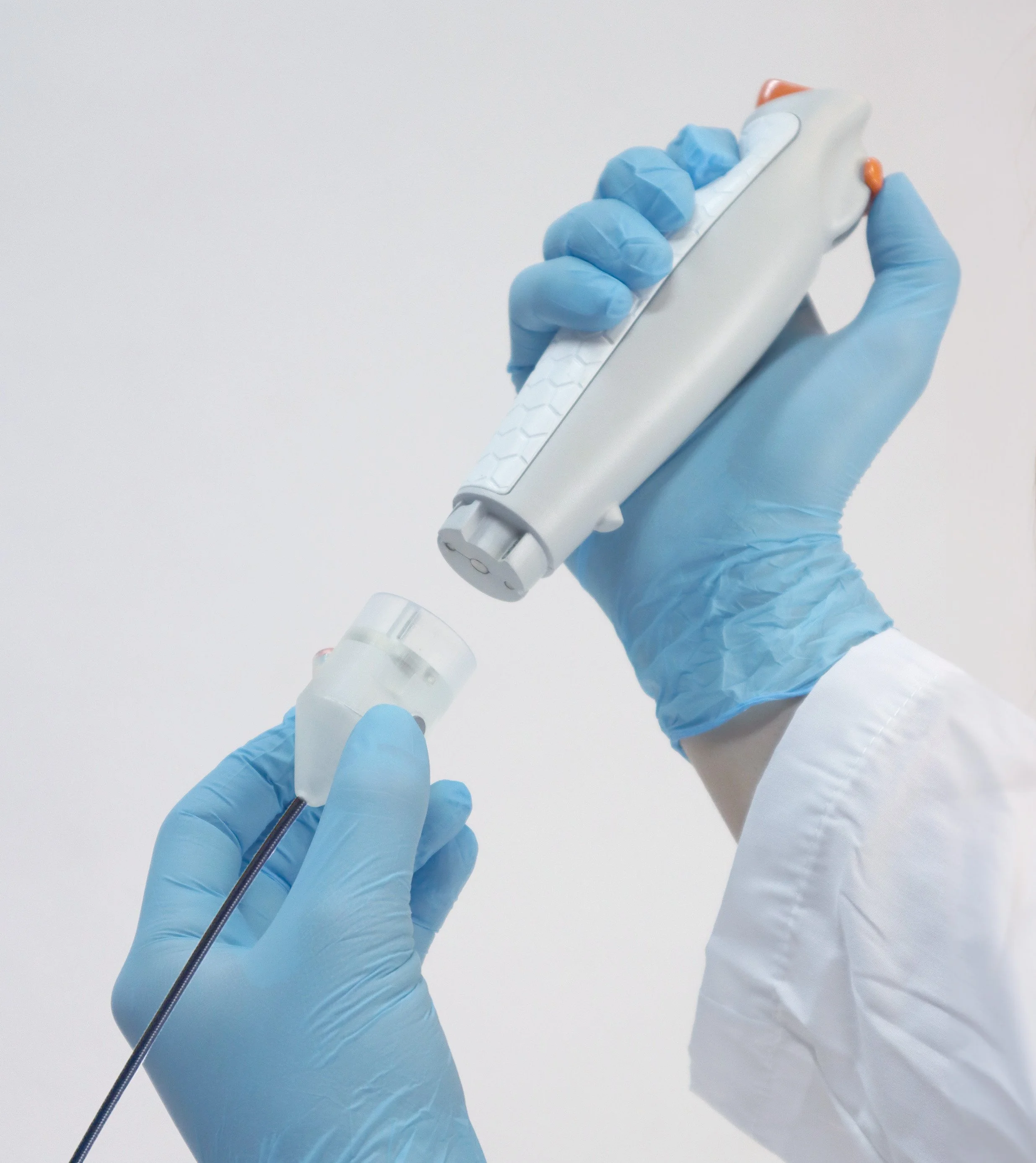
The contaminated end section can easily be removed from the endoscope and replaced between procedures.
Abstract
The damaging effects that the medical industry has on the environment continue to get worse and go unnoticed. This project aims to take steps to solve the medical waste issue, with a specific focus on the medical endoscope, with hopes that the learnings from this research can be applied broadly across the medical field. In recent years, as medical endoscopes have transitioned from reusable devices to single-use, a significant surge in waste production and greenhouse gas emissions has occurred.
However, despite the evident damaging side effects from the transition to single-use, the industry continues to prioritise single-use endoscopes largely because they mitigate the risk of cross-contamination between patients and medical staff, as well as provide an ease-of-use factor as there is no need to reprocess each endoscope after it is used. This study proposes an endoscope redesign in response to the need for more initiative from the medical industry surrounding this problem. In-depth background research and the analysis of literature revealed a gap in research and the market where this project stands. A series of research questions built upon the research were developed, which informed a period of extensive prototyping, testing, and interviews, which allowed for the development of a new endoscope concept.
The processes and principles of this study aim to apply not only to the endoscopy field but also to other sectors of the medical industry to reduce the amount of waste the medical industry produces altogether.
“In recent years, as medical endoscopes have transitioned from reusable devices to single-use, a significant surge in waste production and greenhouse gas emissions has occurred. ”
By separating the contaminated end, 82% of the total weight of the device can be reused repeatedly.
Design Intent
Over the past decade, medical endoscopes have shifted towards a single-use design. This transition was driven by several factors, including the ability of single-use endoscopes to reduce the risk of cross-contamination between patients and the convenience they offer, as they eliminate the need for reprocessing after use. Instead, these devices are simply discarded. While these advantages are significant, the primary drawback of single-use endoscopes is the substantial increase in medical waste they generate. Since the entire device is discarded after one use, this results in a considerable environmental impact.
This project 'RESCOPE' seeks to address this issue. The proposed design retains the benefits of a single-use endoscope while enabling reuse. This is accomplished by making the contaminated components removable and replaceable after each procedure, ensuring that the part of the device in contact with the patient remains sterile. By separating the contaminated section from the rest of the device, only the disposable portion needs to be discarded, significantly reducing waste.
Additionally, a complementary reprocessing machine was developed to support this redesign. This semi-automated, interactive device is designed to mitigate issues related to improper medical waste sorting and limited knowledge of correct disposal practices. The reprocessing machine guides healthcare professionals through the process of safely removing the contaminated section of the endoscope and attaching a new one, ensuring proper waste management and device maintenance.
In essence, this project reimagines the lifecycle of a medical endoscope, transitioning from a linear to a circular model through sustainable design. The findings aim to contribute to the development of circular lifecycles for other medical devices while maintaining efficiency and safety during their use.
“In essence, this project reimagines the lifecycle of a medical endoscope, transitioning from a linear to a circular model through sustainable design.”
RESCOPE has 3 main components: The control handle, the replaceable insertion section, and the power cable.
The internals of RESCOPE have been designed to promote the longevity of the device.
RESCOPE functions alongside a reprocessing machine, which streamlines the reprocessing sequence.
Bio
Sustainability is Anthony’s primary motivation as a product designer. As a graduate honours student in Product Design at the University of Technology Sydney, Anthony is committed to creating products that have a positive impact on our future. He is passionate about addressing real-world challenges and contributing to a sustainable future through thoughtful design. His approach emphasises creative and practical problem-solving, with a focus on developing solutions that can make a global difference. Anthony’s design philosophy integrates form and function, drawing inspiration from nature and prioritising sustainability.
previous project / next project
Copyright UTS Product Design 2026