
Swytch - Modular Keyboard System
by Yasar Tahif Uyguntemur
Swytch - Built to last
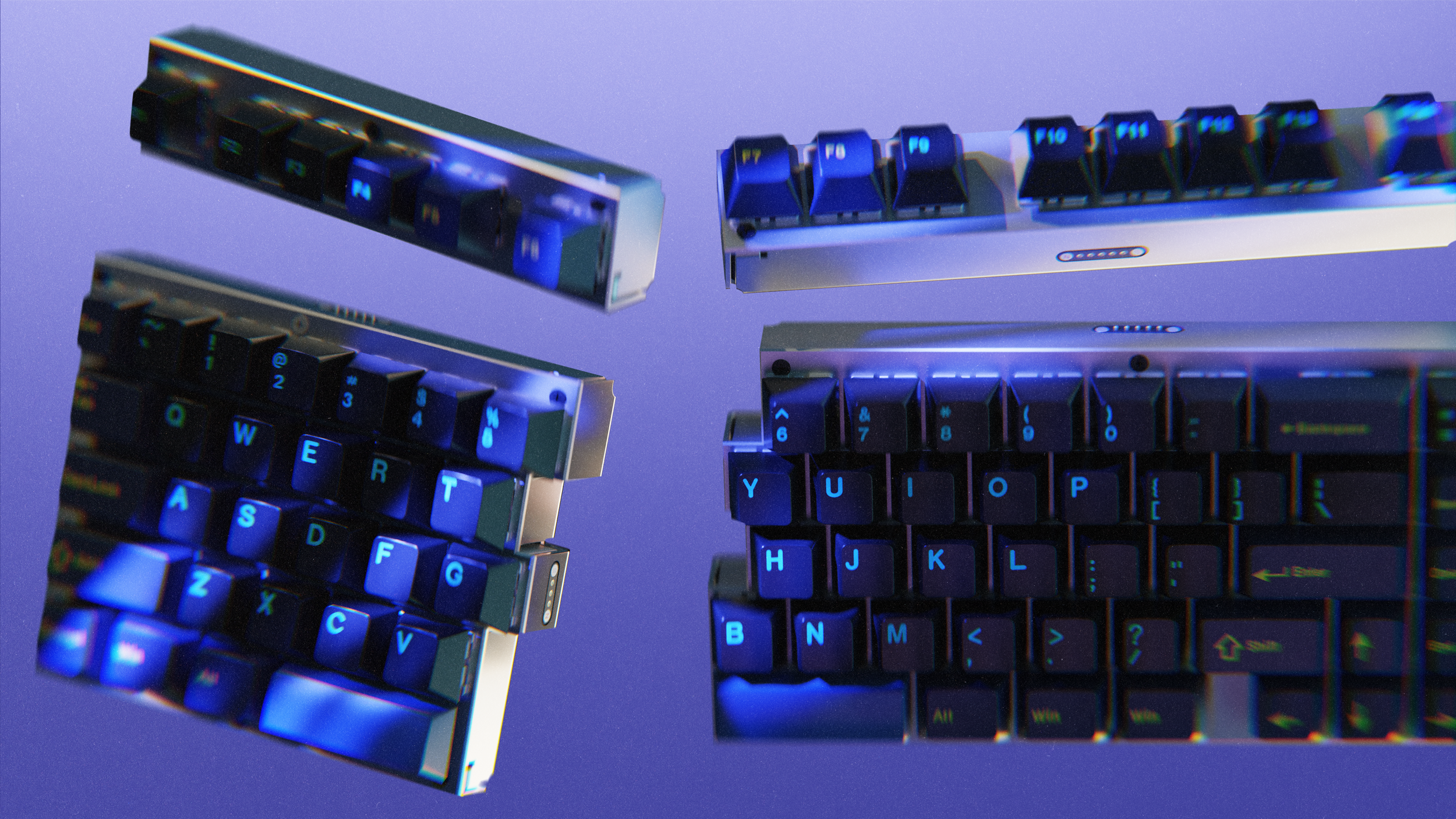
Assemble. Configure. Dissassemble. Repair.
Abstract
This thesis explores how keyboard design can be reimagined to improve product longevity, repairability, and user attachment in response to the growing issue of electronic waste. It argues that by prioritising customisation, modularity, and repairability, keyboards can shift from disposable commodities to long-lasting, meaningful products. The research situates itself at the intersection of product design, sustainability, and user experience, examining how these principles can be integrated to create more responsible consumer electronics.
Historically, keyboards were durable and repairable devices, but contemporary designs have largely transitioned toward sealed, non-repairable products driven by cost efficiency and planned obsolescence. This shift has contributed significantly to e-waste and fostered a culture of frequent replacement rather than maintenance. Through a review of existing literature, the study identifies these industry trends as key contributors to reduced product lifespans and diminished user connection.
Adopting a design-based research methodology, the project investigates how modular and customisable systems can be implemented in keyboard design. This includes analysing current products, conducting prototype development, and testing various configurations to assess usability, feasibility, and user engagement. Findings suggest that modular keyboards with replaceable components not only extend functional lifespan but also encourage users to develop a stronger emotional attachment through personalisation and adaptability.
The resulting design demonstrates a balance between longevity, repairability, and customisation, enabling users to maintain, upgrade, and personalise their device over time. Ultimately, the thesis challenges the prevailing disposable model of peripheral design and proposes a more sustainable, user-centred alternative. It concludes that fostering user engagement alongside sustainable design practices presents a viable pathway to reducing e-waste and redefining the future of everyday technology.
“The research situates itself at the intersection of product design, sustainability, and user experience, examining how these principles can be integrated to create more responsible consumer electronics.”
No Hidden Features.
Design Intent
This project aims to challenge the disposable nature of contemporary consumer electronics by rethinking the keyboard as a long-lasting, adaptable, and meaningful object. The design intent is centred on creating a product that encourages longevity through repairability, customisation, and a stronger emotional connection between the user and their device. Rather than treating the keyboard as a fixed, closed system, this project positions it as an evolving platform that can grow and change alongside the user.
At its core, the design prioritises modularity as a means of extending product lifespan. Individual components are designed to be easily removed, replaced, or upgraded without specialised tools, reducing the need for full device replacement. This approach directly responds to the issue of planned obsolescence by allowing the product to remain relevant over time, both functionally and aesthetically. The system supports a range of interchangeable modules, enabling users to tailor the keyboard to their specific needs, whether for productivity, creative work, or personal preference.
Equally important is the intention to foster user attachment. By allowing users to configure, modify, and maintain their device, the design encourages a sense of ownership and personal investment. This contrasts with conventional peripherals, which often lack identity and are easily discarded. The physical construction, material choices, and visible assembly methods are deliberately considered to communicate durability and transparency, reinforcing the idea that the product is built to last.
The design also aims to balance functionality with a refined aesthetic, drawing inspiration from contemporary industrial design while maintaining a clear emphasis on usability and accessibility. Simplicity in form and assembly ensures that the product remains approachable, while the modular system introduces depth and flexibility.
Ultimately, this project seeks to redefine the relationship between user and device by shifting the focus from convenience and disposability to longevity and engagement. It proposes a keyboard that not only performs its intended function but also acts as a sustainable and evolving tool, contributing to a more responsible approach to product design.
“The design prioritises modularity as a means of extending product lifespan. Individual components are designed to be easily removed, replaced, or upgraded without specialised tools, reducing the need for full device replacement.”
Bio
I'm an industrial designer who builds with intention. My work is driven by curiosity, a search for ideas that hold weight and forms at speak with clarity. I focus on pushing ideas further, creating work that challenges expectations and encourages people to see the world differently. It's about design as dialogue, between people, materials, and the objects that shape how we live.
previous project / next project
Copyright UTS Product Design 2026