
Heather
by Louis Tucker
Heather - Hero shot.

Heather - In context.
Abstract
Rapid advancements in modern textile manufacturing alongside a rise in fashion consumption has led to an overwhelming and unsustainable use of energy and resources.
A shift from linear to circular textile production it is necessary to reduce the industry’s environmental burdens. With polyester being the highest produced Fibre globally, the material is an incredibly untapped resource, considering its potential for recyclability. However, current recycling methods are time-consuming and labour-intensive, stemming from the decommissioning processes, an important step of separating a garment into its respective materials. Decommissioning and recycling is becoming increasingly difficult as technologies and textiles advance; it is now common practice for fibres to be blended and accompanied with difficult-to-remove hardware, voiding their potential for future recycling. This is particularly true when considering outdoor bags, as they are optimised for functional use with maximum protection. In collaboration with recycling company BlockTexx, this research project investigates how effectively circular design can be adopted into wearable garments, streamlining the recycling process without sacrificing product functionality. Using BlockTexx’s innovative recycling S.O.F.T (Separation Of Fibre Technology), and their PolyTexx (RPET from recycled polyester Garments) to create a cross-body messenger bag. By taking advantage of advanced 3D printing techniques with recycled polyester textiles to achieve 100% recyclability. This project demonstrates the potential for a circular economy across fashion and adjacent industries. The final prototype will be an example of how a single material, functional messenger bag for cycling and casual use can maintain its functionality while maintaining complete recyclability.
“By taking advantage of advanced 3D printing techniques with recycled polyester textiles to achieve 100% recyclability. This project demonstrates the potential for a circular economy across fashion and adjacent industries”
Heather - Handling.
Design Intent
This research project explores how advanced manufacturing innovations can support a more sustainable, circular product lifecycle. In collaboration with garment recycling company BlockTexx, it will leverage their recycling technologies to produce a wearable messenger bag. The project aims to demonstrate the potential of recyclable, homogeneous materials like PET in applications typically dominated by non-recyclable composites. A circular economy approach will guide the bag’s construction, focusing on waste reduction through pattern design and energy-efficient manufacturing. This will be explored through research questions:
To what extent can innovation in garment recycling through BlockTexx and their S.O.F.T. technology promote a circular economy?
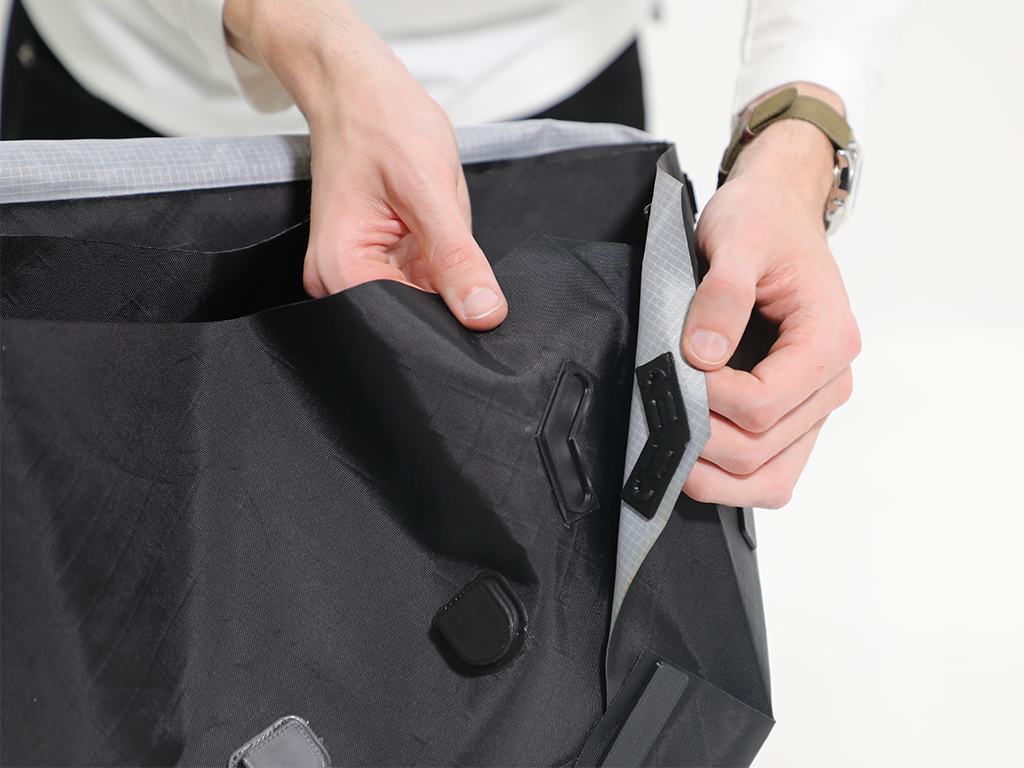
Close up - 3D printed popstud hardware.
“ A circular economy approach will guide the bag’s construction, focusing on waste reduction through pattern design and energy-efficient manufacturing. This will be explored through research questions.”
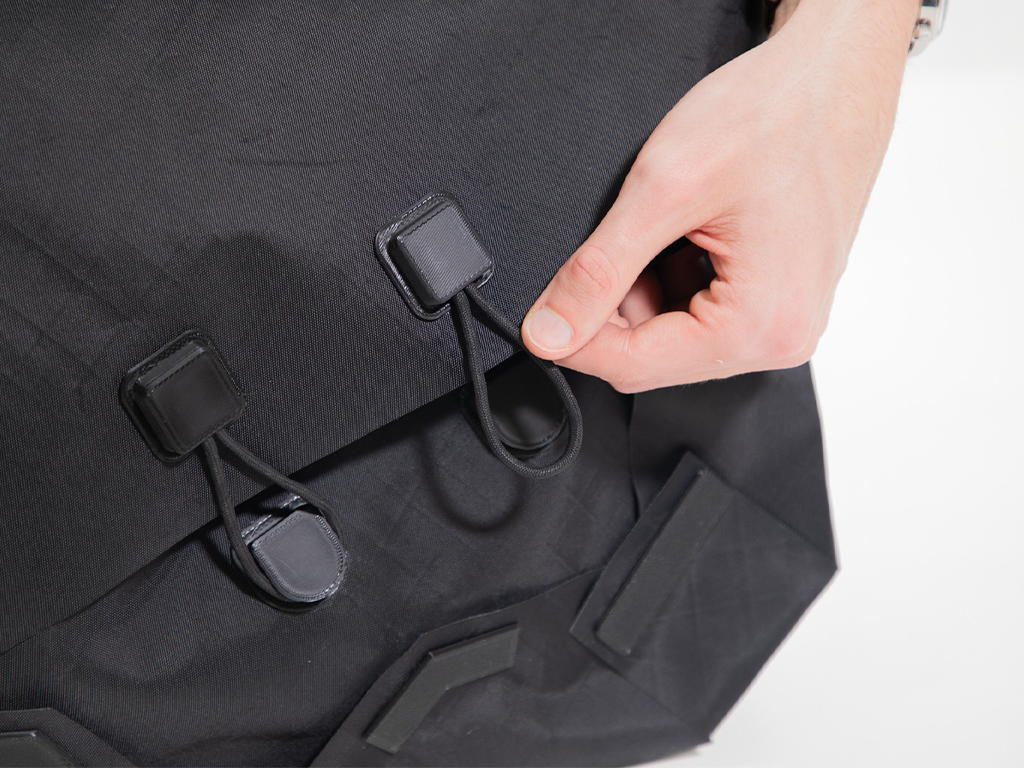
Close up - 3D print + foreign material closure.
Close up - Internal laptop sleeve.
Bio
Creating a product that could be of use to the researcher once completed was core to Louis’ project. A deep interest in fashion, alongside a desire for a “guilt-free” recyclable alternative to synthetic products, encouraged Louis to conduct this project. Making a final product that was functional and elegant was a criteria Louis made during the genesis of this project. Being a conscious consumer, Louis had taken note of the plethora of casual/functional bags that pride themselves on their material choice for durability and lightweight properties; however, little focus was placed on the end-of-life stage for these products. This project hopes to address this issue and find a feasible solution.previous project / next project
Copyright UTS Product Design 2026