
Scoode: A Playful Office Partitioning for Well-being
by Alice Purnama Sari
Scoode set-up with hood partitioning and scooter
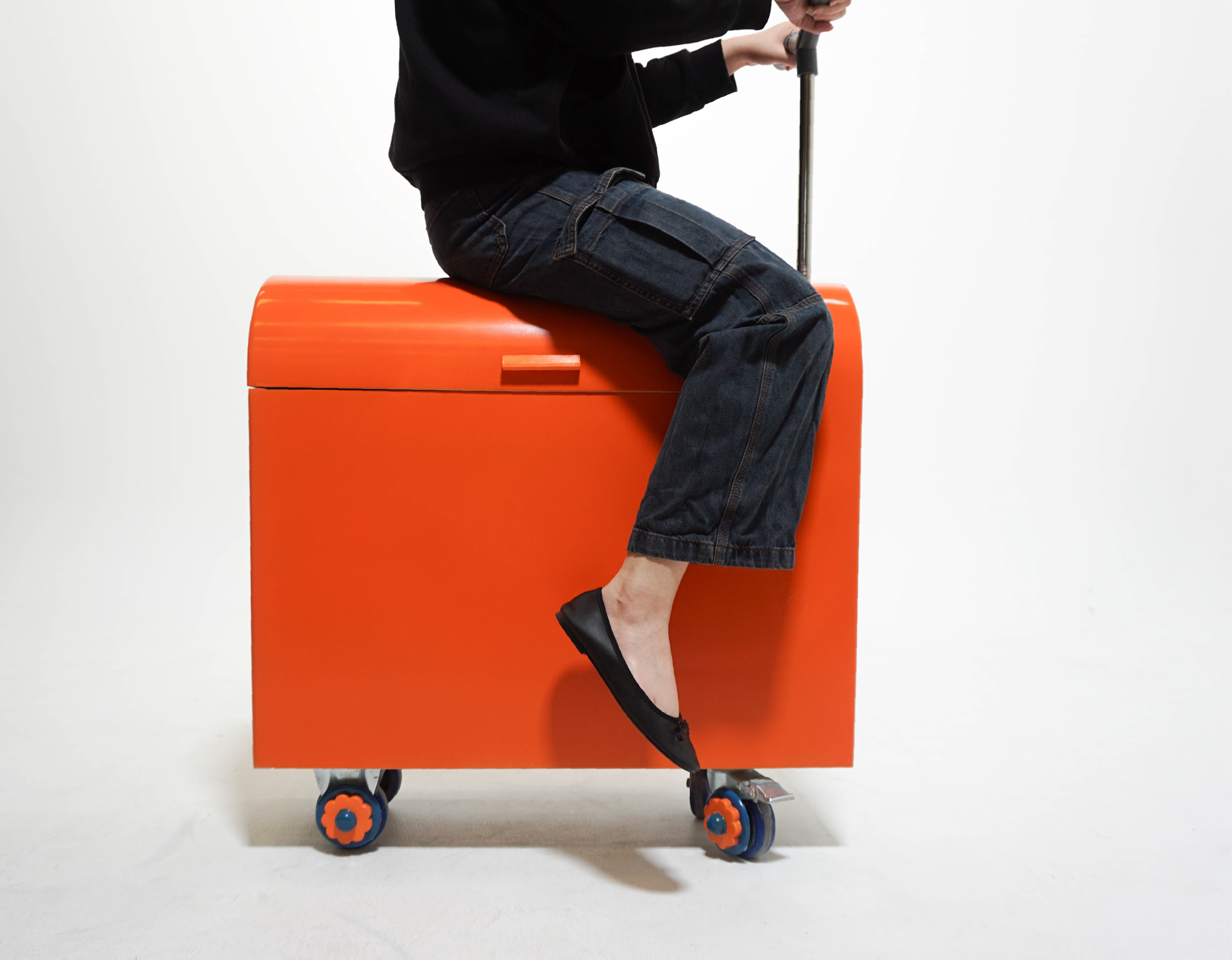
User riding the scooter to their office desk
Abstract
Scoode examines the connection between the physical office environment and well-being through play or playfulness. It also explored the contribution of a sense of personal and private space and distractions in the office to stress and burnout. Throughout history, offices have been designed with cost-effectiveness in mind; this comes at the expense of employee’s needs and well-being. Until now, employees have been moulded to fit a particular office layout. Research into psychology and office layouts has informed the need for an intervention. It is further supported by interviews with experts and a survey conducted among office employees. This project aims to empower employees with a sense of control over their physical work environment and reclaim personal space while promoting well-being. The design introduces a playful scooter that stores a pop-up hood partitioning to create a flexible, adaptable office layout. By incorporating play elements, the design encourages a sense of personal and private space within the office and helps reduce stress and mitigate burnout. The project introduces a new perspective by supporting employees’ sense of control and encouragement to play, which will improve their well-being. The ultimate goal is not only to inspire change in the working environment and promote a healthier, more playful and productive workplace but also to increase awareness of designing the workplace in an employee-centred way.
“By incorporating play elements, the design encourages a sense of personal and private space within the office and helps reduce stress and mitigate burnout.”
The user taking the folded pop-up hood out of the storing scooter
Design Intent
Scoode connects the physical office environment with well-being through play and adaptability. It emphasises the importance of personal and private space while addressing workplace distractions, which can contribute to stress and burnout.
As Baldry & Barnes (2012) stated, “… the design of the work environment is never a one-size-fits-all process”. This statement captures the problem accurately. Historically, office designs have followed a one-size-fits-all process, prioritising cost-effectiveness and often overlooking employee needs. This leads to dissatisfaction, which can manifest in issues like a lack of privacy and increased distractions, which, in turn, can escalate into more significant problems, including stress and burnout.
Therefore, Scoode challenges this with a flexible, employee-centred design approach. The design includes a pop-up hood partition (with customised clamps) for adaptable privacy and a scooter that encourages play, both designed to enhance well-being in the office. These interchangeable elements give users a sense of control of their space and privacy and give them space flexibility.
Incorporating playful elements into the office is particularly significant for this project, as among the many benefits of play, one of them is that the “concept of play at work, resulting in higher productivity, increased job satisfaction, excellent workplace morale, and decreased absenteeism” (Robinson et al., 2018). Playful features can make the office more enjoyable and boost morale, ultimately combating stress and burnout while encouraging employees to approach tasks with greater motivation. This helps employees feel valued, supporting a more productive work atmosphere.
“Historically, office designs have followed a one-size-fits-all process, prioritising cost-effectiveness and often overlooking employee needs. This leads to dissatisfaction, which can manifest in issues like a lack of privacy and increased distractions, which, in turn, can escalate into more significant problems, including stress and burnout.”
Scooter parked next to hood set-up
Pop-up hood partition with custom clamps
The partition folding process
Bio
Alice Sari is a Product Design graduate from the University of Technology Sydney. Her passion revolves around designing innovative products with a playful touch to elevate visual appeal and user experience. Fuelling her design journey is her curiosity for researching and appreciation for the history of product design, which she applied in this project. Her skill set includes proficiencies in prototyping, CAD, and Adobe Creative Suite, as well as hands-on model development and 3D printing. This multifaceted expertise allows her to bring my design concepts to life with precision and creativity. Her previous role was as a product designer for Evaheld, where she designed user experiences for their website and services. Beyond her academic endeavours, she is interested in exploring various design styles and giving life to ideas that stand out through their uniqueness.
Copyright UTS Product Design 2026