
Halo
by Zoe Fajemisin
Halo transforms a clinical EEG test into a user-friendly sports performance wearable to support young adult athletes and coaches in completing neurofeedback training and meditation practices
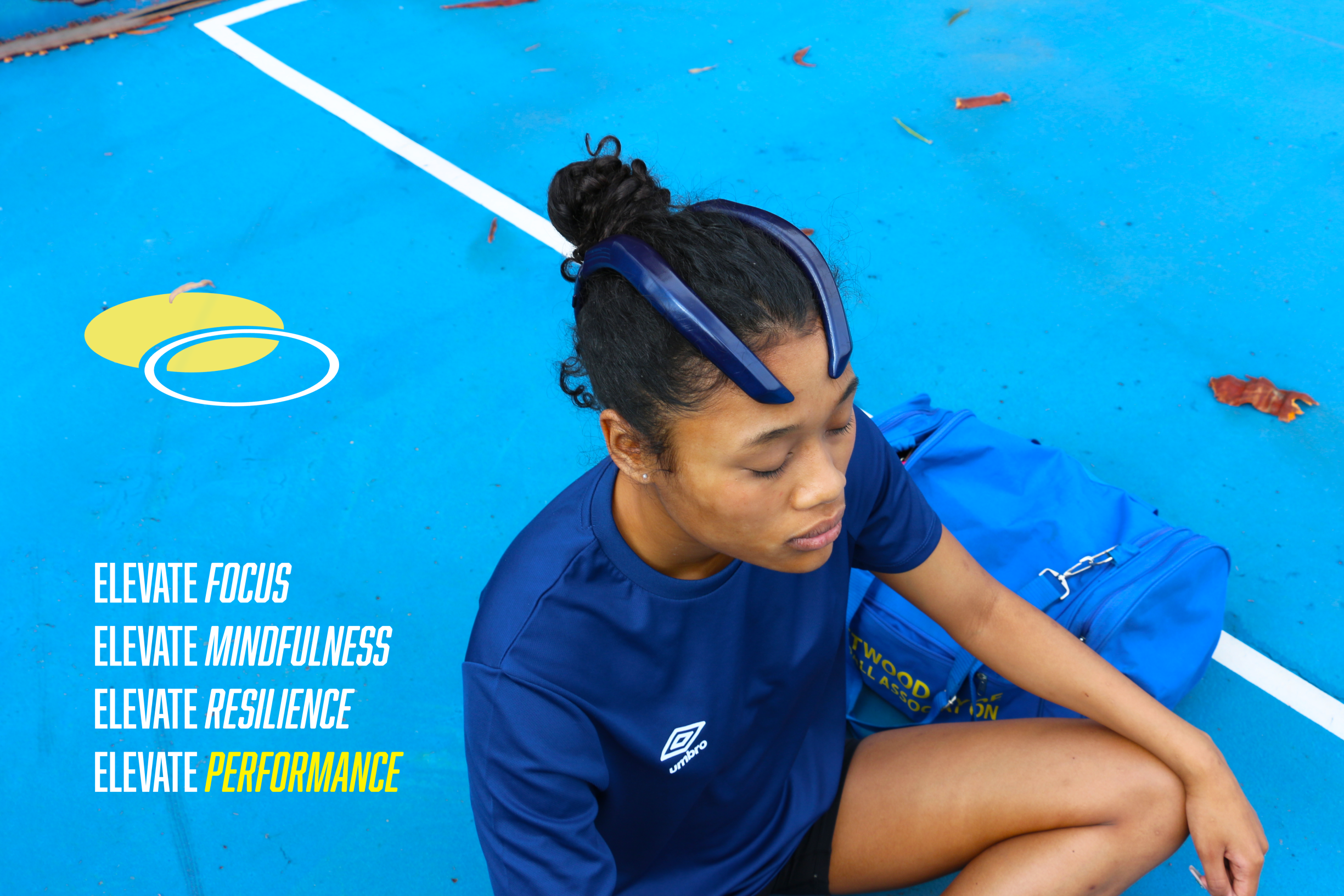
Halo can be used by athletes to monitor brain activity to optimise their mental game and physical capabilities.
Abstract
As BCI technologies improve and individuals continue to track other elements related to health, the concept of a ‘Fitbit for the brain’ can be predicted. Electroencephalogram (EEG) can be used to monitor brain activity of healthy individuals towards greater cognitive and mental outcomes. In addition, utilising EEG technology outside a clinical setting, could allow prevention and early intervention for a variety of neurological disorders. For designers, this is an opportunity to reform a medical device that initially existed in the clinical diagnoses or rehabilitation stage to a general wearable with refined hardware, ergonomics and aesthetics. Portable, consumer EEG devices exist on the current market for general tracking, sleep, meditation, etc. However, they lack a deeper aesthetic consideration, as many intend to be used in the home with function at the forefront. A user-centred design process should embrace aesthetic innovation to avoid the stigma threat often connected to the appearance and values associated with medical wearable devices.
As consumer level EEG devices emerge, appropriate reviews and directions of this technology to specifically target sports performance is scarce. As athletes are increasingly turning to technology to improve their physical performance, a wearable that focuses on optimising their mental game may offer a more holistic and sustainable approach to training. Key to the project’s mission is the awareness of a portable EEG device and application to assist young adult athletes in completing neurofeedback training and meditation practices, before and after training or competition, towards mindfulness, focus and resilience. Overall, this Halo introduces a new sporting context and visual language to an existing market of EEG devices, to inspire highly functional medical products to be expressive wearable extensions.
“The way we do neuroscience nowadays is fundamentally flawed ... we only study brains when something goes wrong...
people with supposedly healthy brains almost never have their brains scanned ...”
Halo comes in three colours; golden yellow, tiger orange and midnight navy. These colours have been chosen to shape the brand identity as bold, youthful and high performance.
Design Intent
Historically, studying ‘healthy’ brains to better understand neurological or behavioural disorders has been insufficient, with a focus on diagnosis and rehabilitation. With improvements in EEG technology, wearable products can monitor healthy individuals over an extended period to enact conscious behavioural change, improve brain function and identify early biomarkers towards prevention of brain related challenges. Current EEG systems involve conventional EEG caps for clinical and research purposes as well as generalised health tracking wearables. These devices can lack aesthetic appeal, ergonomic design, a user-friendly application and context specific performance features. Thus, to push EEG usage to the everyday consumer, these holistic design features should be considered. As such, the purpose of this research project was to transform a traditionally clinical device into a user-friendly sports performance wearable with refined hardware, improved ergonomics, and enhanced aesthetics.
As athletes turn to technology to optimise their physical capabilities, a wearable that targets mental performance may assist with providing a comprehensive and sustainable approach to training. Research suggests the potential of an EEG device to be incorporated into an athlete’s training or pre/ post-competition routines, promoting focus, resilience, and mental clarity. Tailored meditation and feedback sessions are administered through the application and visualised in a clear and intuitive manner. Therefore, the core rationale of Halo is to empower individuals to have greater control over their brain health and holistic wellbeing by using EEG technology outside of a clinical setting.
“‘‘ For decades, the best neuroscientists could do was use electroencephalography
... to detect the signals that characterised different stages of sleep or the in brain
power surges brought about by epileptic seizures. And that wasn’t easy.
They had to shave people’s heads, put them in a room far from any other
sources of electricity and use conductive gel to stick several dozen electrodes to
the skin atop their skulls...The rise in popularity of wearable health technology
has opened up the opportunity for us to monitor, track and learn about the brain
and to start to build better models of the brain across a broad spectrum of users, not just people who are ill.”
”
This device is made from polycarbonate housing, silicone and gold-plated electrode sensors as well as a padded occiput cushioning. These parts are assembled into sleek, ergonomic, over the scalp form that intends to create a sense of empowerment and attachment to the device.
The Halo app is key to this portable EEG wearable. The app’s algorithm tailors training sessions based on age, sport, goals, etc to meet the athletes needs.
The Halo app assists athletes with meditation sessions and neurofeedback training. Brainwave data is collected so users can reflect and visualise their mental state in relation to training.
Bio
Zoe is a curious and innovative Product Designer, with a particular interest in wearable products and the surrounding systems and user experiences. Her holistic, problem-solving approach to medical devices allows her to create user-centered products that function to enhance the health and wellbeing of individuals. In conjunction with refined functionality, she is dedicated to redesigning aesthetically mundane products to create unconventional, expressive forms so users can feel a sense of pride and connection to their devices. She takes on an empathic approach for medical wearable products, designing for empowerment and enhancement rather than disability and assistance.
Additionally, Zoe is fascinated by the concept of ‘design futuring’, envisioning likely products and systems, often merging advancing technologies with the human experience. Her own interests and understanding of user needs led to the research and visualisation for a ‘FitBit for the brain’ concept as something probable and feasible in the near future. By refining aesthetics, ergonomics and performance features, Halo attempts to create a unique redesign on traditional EEG devices.
Copyright UTS Product Design 2026