
Cocoon
by Sylvie Slinger
Cocoon’s furniture design shows a lightweight metal frame and vandal-resistant upholstering material
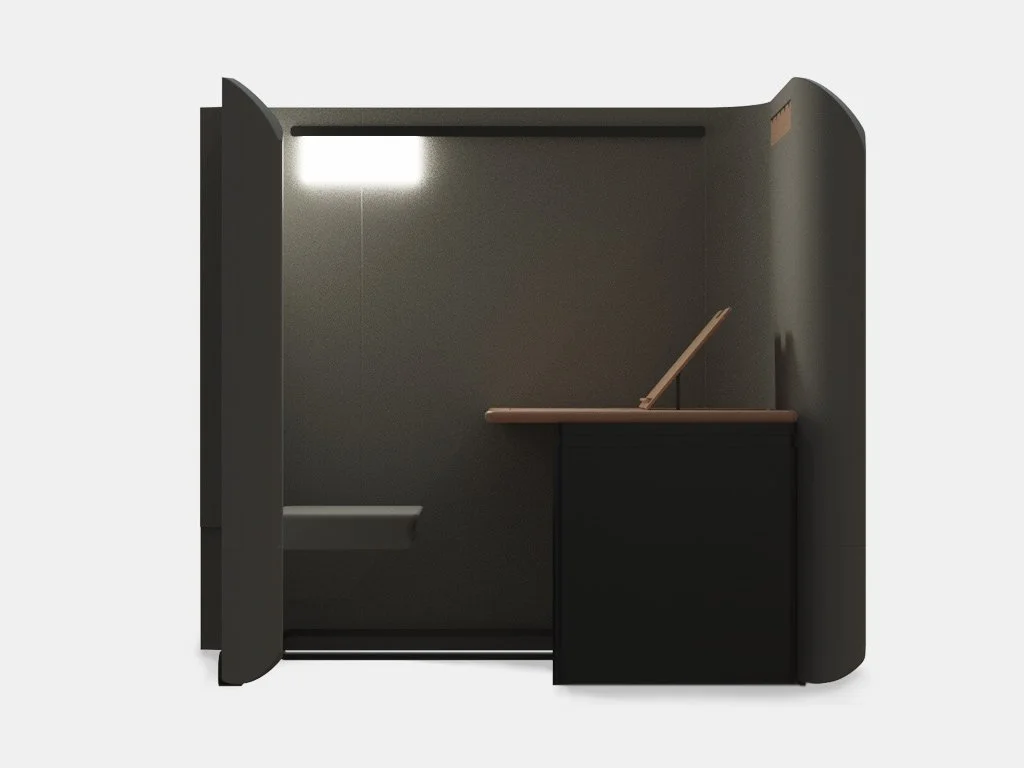
Side view of the Cocoon pod
Abstract
As people continue to live further away from job hubs in cities due to rising living costs, commutes are becoming longer, creating an uneven life-work balance and increasing stress in workers. Active commuting must be better facilitated in trains to increase work fulfilment and job satisfaction. Cocoon creates this environment.
Extensive research of the market (trains in cities) showed that there was a lack of interactions (physical and visual) to enable the creation of habitual active commuting (interaction in a space to create behavioural patterns in productive commuting). From surveying, basic needs were not met in trains for users, such as storage, power, internet, stress-relieving materials, etc.
Cocoon is an adaptable workspace in trains that allows interactions to occur to create productive, healthy habits like active commuting. Using premium, stress-relieving materials like wood makes users feel comfortable and more inclined to work on trains. User needs such as storage, ergonomic working, adjustable light, power, and privacy are also answered. The metal extruded frame makes the design lightweight and easy to fit into pre-existing Sydney train carriages. Vandal-resistant material encapsulates the sides of the pod, allowing ease of repair and durability. All these interactions (physical and visual) create a beautiful space to facilitate active commuting while boosting motivation and stress reduction, creating more fulfilled and healthy workers.
This design would be an explorative concept for the commercial use of NSW Transport.
“Active commuting must be better facilitated in trains to increase work fulfilment and job satisfaction. Cocoon creates this environment.”
Top view of multiple Cocoon pods in use in a train carriage
Side view of both levels of a train carriage with Cocoon pods being implemented
Interactions for habitual, active commuting, allowing an ergonomic workspace to be created for healthier long commutes
Bio
Passionate about creating innovative solutions to emerging problem areas, Sylvie is a product designer with a background in biology, allowing seamless incorporation of research and client trial data into every design concept. Specialising in CAD, prototypes, and research; Sylvie’s career aspiration is to work in a company where sustainability, usability, and timeless design are at the forefront of every diverse project.
previous project / next project
Copyright UTS Product Design 2026